
Leonardo da Vinci's Youth

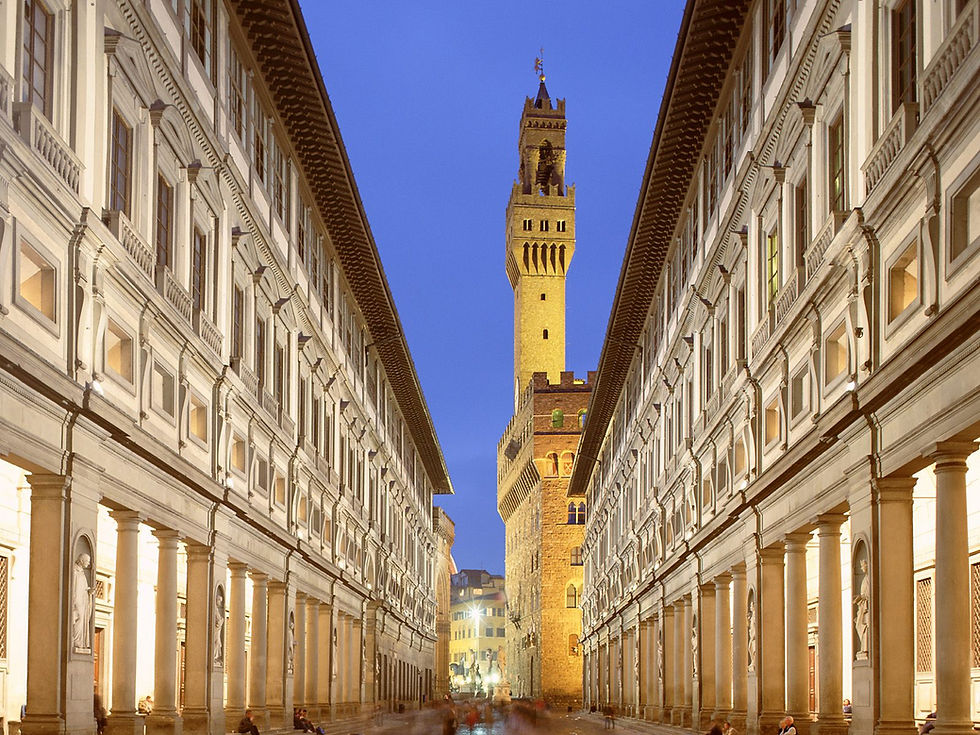
Leonardo di ser Piero da Vinci was born on April 15, 1452, in or near the small Tuscan village of Vinci, about 35 km from Florence. He was the illegitimate son of Ser Piero da Vinci, a prosperous notary, and Caterina, a peasant woman (likely a local farmer’s daughter). His parents never married and both wed others shortly after his birth. Leonardo grew up primarily in his paternal grandfather’s household in Vinci, with some time possibly spent with his mother.
Unlike many Renaissance artists from artisan families, Leonardo received only a basic, informal education in reading, writing, and mathematics. He was largely self-taught in many areas and showed an early fascination with nature, drawing, and observation. Two childhood memories he later recorded stand out: a kite (or similar bird) hovering over his cradle and brushing his face with its tail (which he saw as an omen), and discovering a dark cave in the mountains, torn between fear of a monster and intense curiosity to explore it.
Around age 14–15 (circa 1466), his father apprenticed him to Andrea del Verrocchio, one of Florence’s leading artists and a master of painting, sculpture, and workshop techniques. Verrocchio’s bustling studio was a hub for talented young artists, including the young Sandro Botticelli.
In Verrocchio’s Workshop: From Errand Boy to Rising Star
As a garzone (apprentice), Leonardo started with menial tasks: grinding pigments, preparing panels, cleaning brushes, and assisting with sculptures. He quickly advanced to drawing, painting, and more complex work. Verrocchio emphasized anatomy, perspective, and high craftsmanship—skills Leonardo mastered and later transcended.
The Baptism of Christ and the Famous Angel (Legend/Fact): One of the most enduring stories from Leonardo’s apprenticeship involves Verrocchio’s The Baptism of Christ (c. 1470–1475, now in the Uffizi). Verrocchio painted the central figures of Christ and St. John the Baptist. Leonardo, still a teenager, was tasked with painting one of the kneeling angels on the left. His angel—with its graceful pose, soft modeling, ethereal expression, and superior handling of light and drapery—outshone the rest of the painting.
According to Giorgio Vasari’s Lives of the Artists, Verrocchio was so impressed (or humbled) by his pupil’s superior work that he reportedly never painted again, focusing instead on sculpture. Modern scholars view this as somewhat legendary—Verrocchio did continue other work—but it beautifully captures Leonardo’s early genius. Leonardo likely also contributed to parts of the landscape and possibly more.
Other early works from this period include The Annunciation (c. 1472–1476) and small Madonnas like the Madonna of the Carnation, showing his emerging mastery of sfumato (soft blending) and emotional depth.
Early Independent Steps and Florentine Life
By the early 1470s, Leonardo was registered in the painters’ guild of Florence. He received some independent commissions, such as an altarpiece for the Chapel of St. Bernard (unfinished) and the Adoration of the Magi (1481, also left unfinished). He painted portraits like *Ginevra de’ Benci* (c. 1474–1478), notable for its psychological insight and naturalistic background.
Leonardo was known for his curiosity and wide interests. He filled notebooks with observations on anatomy, optics, water flow, flight, and mechanics—often far ahead of his time. He dissected animals (and later humans) to understand form and movement. His illegitimacy freed him from expectations of a notary career, allowing this boundless exploration.
Anecdotes from Vasari and others portray him as charismatic, handsome, strong, and a lover of animals (he reportedly bought caged birds just to set them free). He was also a perfectionist who often left projects unfinished, driven by constant experimentation.
Transition to Milan and Path to Greatness
In 1482, seeking new opportunities (and possibly fleeing political tensions or seeking patronage), Leonardo moved to Milan. He offered his services to Ludovico Sforza (the Duke) as a military engineer, architect, and artist—listing inventions like bridges, weapons, and flying machines alongside painting and sculpture. In Milan, he created The Virgin of the Rocks, Lady with an Ermine, and later the iconic The Last Supper (c. 1495–1498).
The Mona Lisa (begun around 1503) and other masterpieces came even later, after he had returned to Florence and continued his restless wandering.
Blending Fact and Legend
Much of what we know about Leonardo’s youth comes from Vasari (writing decades later) and Leonardo’s own notebooks. Stories like the angel in *The Baptism of Christ* blend verifiable collaboration with dramatic flair. His childhood kite memory and cave exploration highlight the insatiable curiosity that defined him.
Before the Mona Lisa, Last Supper, or vast inventions, Leonardo was an illegitimate country boy turned apprentice whose talent, observation, and imagination set him apart. In Verrocchio’s workshop, the Renaissance ideal of the artist as universal genius began to take shape—one drawing, one angel, and one boundless question at a time. His early years in Tuscany and Florence laid the foundation for a mind that would redefine art, science, and human potential.


Comments